~6 minute read.
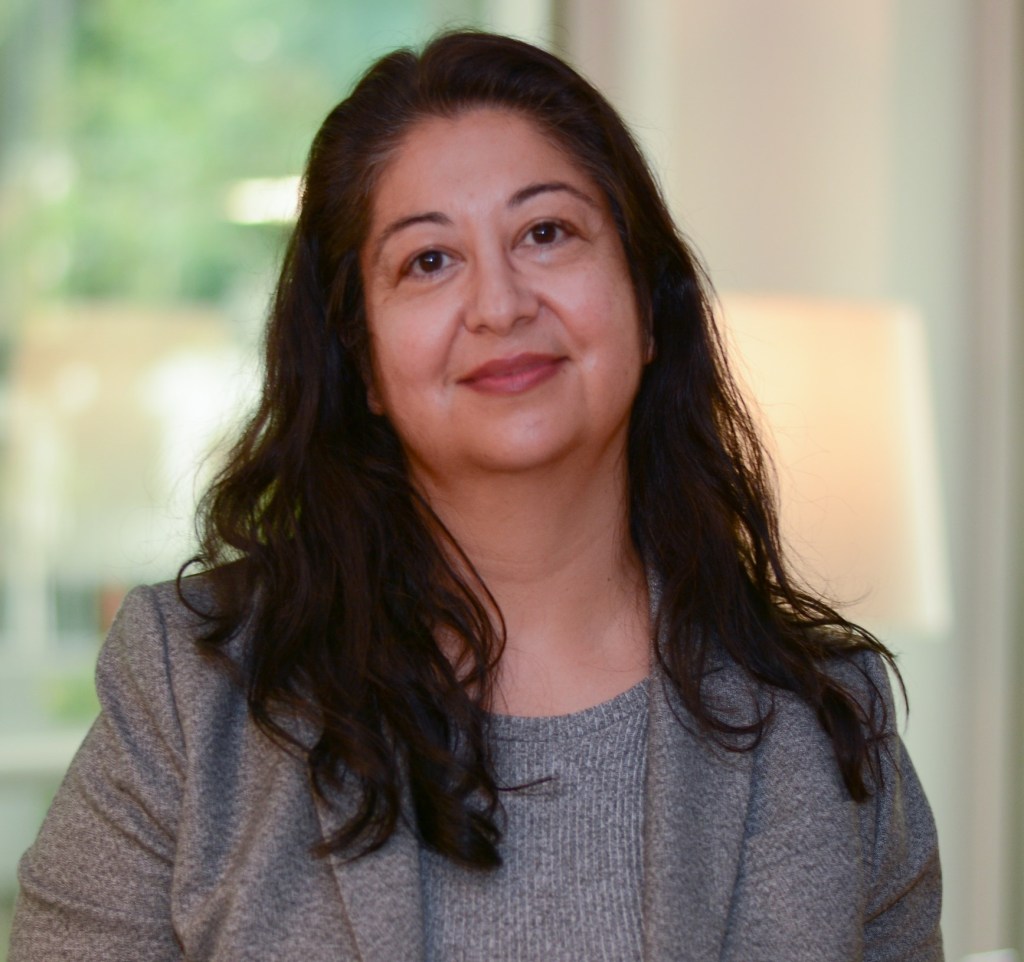
Sweta Ghelani is currently the President and General Manager of Novartis Pharmaceuticals Argentina leading more than 170 people, who are committed to delivering transformative innovation and life changing treatments to Argentinian patients. She has over 20 years of experience within the pharmaceutical industry and has held a variety of leadership, marketing, sales management and medical roles across four continents and countries (Australia, Switzerland, Canada and Argentina). She has also worked within the hospital setting as a HIV pharmacist and hopes to see the end of the HIV epidemic in her lifetime.
Join us as Sweta shares her experiences, learning and wisdom of courage.
Please note that opinions expressed within this interview are solely her own and do not express the views or opinions of her employer.
How would you describe workplace courage?
I personally believe courage in the workplace involves the combination of three things. First, your action, or decision to speak out, carries a level of personal risk. Second, you feel some degree of fear or discomfort with your choice. And third, your action is intended to help the organization improve. For example, speaking out about things that erode the culture and communicating with intellectual honesty represents courage to me. The right decisions are not always the popular ones and often being able to discuss the reality of the situation in an unfiltered way takes a lot of courage.
I don’t believe it takes a lot of courage to speak out or act when major issues, such as a breach of ethics occur, as companies usually have clear guidelines regarding the big cultural issues. For example, how to deal with bullying, harassment and discrimination guidelines are usually clearly spelt out. However, it’s often the accumulation of small issues such as micro inequities that can seriously damage your culture over time. There tends to be far less guidance regarding these small hits to the team culture. Therefore, it becomes a judgment call as to whether you address them in the moment. It takes courage to do this because of the individual nature of each issue as well as the investment of time. As the general manager, you are focused on big picture issues – things like strategy, finance and talent development are daily priorities. I believe it takes courage within this competition for cognitive processing to stop and think about the implications of how someone spoke to a direct report, worded an email to the field force or dealt with a supplier. To stop and say, “I need to make the time to have a difficult conversation with this person as a priority.”
“… speaking out about things that erode the culture and communicating with intellectual honesty represents courage to me.”
What does courage look like in your workplace?
I currently lead a team of over 170 people in Argentina. Argentina is a highly VUCA environment. There are multiple challenges in the external environment with hyperinflation at 90% this year. In addition, we have devaluation of the national currency, a fragmented payor landscape, with more than 400 payors, and complex labor laws to navigate. Change is a constant in Argentina.
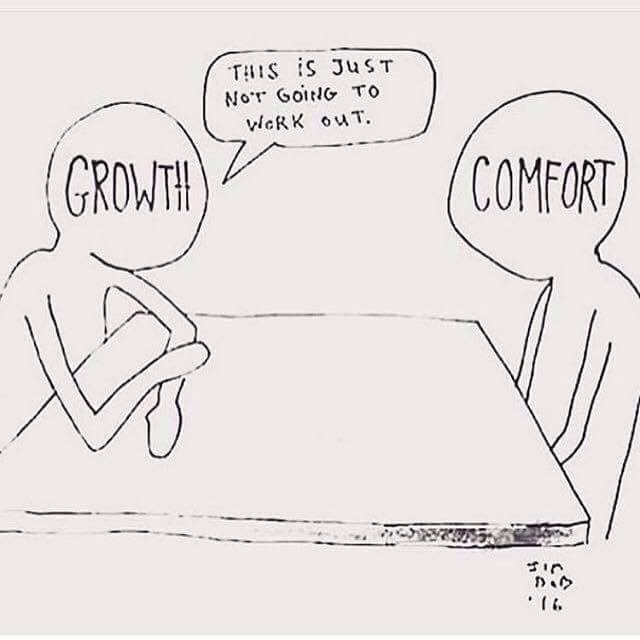
Broadly speaking, courage in this environment is about being able to see the opportunities without getting swamped by the challenges. Teamwork and collaboration are critical success factors in this environment, so you must fiercely protect the internal culture. To be successful you must have a unified team with the grit to find solutions through the many challenges. This doesn’t happen by chance. For me, courage in this environment is about getting comfortable with constantly being uncomfortable. I think success in a VUCA environment involves some degree of letting go of the concept of being in control of all aspects of the business. This year I’ve worked on being more present in the moment and this has also required me to be more courageous in some ways.
Coming from a marketing background I’ve been trained to be able to juggle multiple projects, ideas and timelines in my mind. Marketing requires you to constantly think about the future and about how your strategies and tactics are likely to work given the market dynamics. These skills are very useful in my current role. What I found though is I required a shift in my thinking to also be more present in the moment.
If I saw a managers communication style was having a negative impact on a team, I could easily make a mental note to chat about this at our next one-to-one meeting. Changing focus to being more present means I needed to address these issues in the present. This sometimes means a 15-minute change to my agenda so I can have the conversation with the manager immediately following the meeting. I had to reprioritize conversations that should happen now rather than later. I think it takes courage to remain present and prepared to coach in the moment.
“For me, courage in this environment is about getting comfortable with constantly being uncomfortable.”
Please describe 1-2 examples in which you have been courageous. What did you do? Who/what enabled you to be courageous? What was the outcome?
I had a situation a few years ago when I was facilitating a strategic workshop in Europe. In the middle of the session my manager made a highly inappropriate sexist comment. As I looked around the room, I saw the same shocked expressions on all the women in the room.
I was so surprised by the comment that I just responded by saying, “Thanks for that. What a great way to alienate the audience. Put up your hand if you are offended?”
All the women in the room immediately put their hands up. Afterwards, one of my male peers offered some advice saying, “Please tell me you are going to say something to him – he shouldn’t have done that.”
Giving feedback to your direct manager about issues like this can be fraught with danger. This is the individual who decides your bonus, salary increases and may, or may not, recommend you for future roles. I knew the conversation would potentially be very uncomfortable and had personal risks attached. It was the image in my mind of the faces of the women in the room that helped me make the decision to speak with him. In the moment I could almost read their minds. It was like they were all collectively thinking, “It’s 2016 and we still have to deal with this nonsense! When will it end?”
It was an uneasy conversation, but I explained that any of the women in the room could lodge a complaint that could ultimately lead to his loss of employment. I asked if a few smiles from his male colleagues was worth the risk. In addition, the meeting was designed to create greater cross-functional cohesion, yet he had alienated half of the audience. Thankfully, the inappropriate comments ceased which make the feedback worthwhile. In hindsight, I would have always felt I’d let every one of the women in that room down if I didn’t speak out.

My second example involves supporting an individual. In Canada at the time, we were going through a period of intense war for talent. My franchise was operating on a much smaller budget than many of my colleagues which meant I was unable to entice experienced talent with a competitive salary package. At the same time, I noticed a young brand manager on my team who was asking all the right questions. In addition, she wasn´t afraid to challenge me and she even did this at our very first interaction.
She was not a self-promoter and wasn’t on the organization’s future talent list. When I was filling a Brand Director role however, I told the Head of HR that I wanted her to apply for the role. His response was a definitive “No!” In addition, my colleagues also said she wasn’t ready to take on such a senior position.
I took the risk of pushing for her to be put through the selection process despite the multiple barriers raised by colleagues and more senior managers. She demonstrated great skills through the interview process, but I was again advised against hiring her for the role.
“Too junior, too inexperienced, we don’t know her well enough”, went the complaints.
Eventually, I was able to promote her into the role, but I had some substantial warnings about consequences if she didn’t prove to be successful.
Eighteen months later the brand moved from single digit growth to double digit with no incremental spend. Eventually, she was recognized as a great resource for the organization. The best part for me was having other people within the business offering her promotional roles within the company. When other leaders came to me to recruit her, I had to jokingly say, “Take a ticket and join the line!”
Other people took the courage to hire me into senior roles. I learnt that it takes courage to take a risk on individuals sometimes. Especially when the organization has a differing view on your choice. No one gets hiring choices 100% right all the time – which makes courage an essential ingredient with these decisions.
From your point of view, to what extent are Australia’s leaders leading with courage?
Australians have always had a reputation for being resourceful, independent thinkers. I think courage is a big part of the Australian ethos. As I work in and visit other countries, I’m constantly surprised by the number of Australian leaders I meet. We are overrepresented globally compared to our population. I think this says a lot about our courage.
I haven’t worked in Australia for a few years now, but I do know several leaders that I believe lead with courage. Nathalie McNeil, Nicky Long and Richard Tew are a few names that come to mind.
The reality is that our teams know when we are not leading with courage. Occasionally they call it out and complain about the leader’s lack of courage. Even if they say nothing you can almost guarantee engagement has been eroded, or even destroyed when we take the easy decision instead of the courageous one. When we lead with courage, we inspire others to do the same and that can only be great for our organizations, great for the people we serve, and great for our customers.
“Even if they (our teams) say nothing you can almost guarantee engagement has been eroded, or even destroyed when we take the easy decision instead of the courageous one.”
I want to say from the outset that I do not consider myself an expert in global leadership – really, I am more of a pragmatic student. I’ve worked in four continents and lived in five but I’m conscious that this still represents a tiny slice of global exposure. I’ve also had global roles, yet you only see a very thin slice of what is happening within each of the countries you work with. It’s only when you are living in the country and working alongside the team that you start to fully understand the issues and challenges they face. This is definitely reflected in my experiences in Australia, Canada and Argentina to date.
One commonality I have observed though is that the leadership challenges we all face tend to be very similar. We have an inherent need for affiliation with our colleagues; we prefer it when the company has a purpose; and we want equity. No one wants to work within a toxic environment with a poor culture regardless of our ethnicity or location. I’ve seen multiple times that people prefer a leader who can create and maintain the right environment for everyone to thrive. And I believe it takes daily courage to achieve this.
“I’ve seen multiple times that people prefer a leader who can create and maintain the right environment for everyone to thrive. And I believe it takes daily courage to achieve this.”
If you’d like to connect further with Sweta, you can do so via her LinkedIn profile.
I met Sweta when we worked together many years ago. As she has travelled and worked in various parts of our globe, I have followed and been inspired by her leadership and her wisdom, and hence, I asked Sweta if she would be interviewed for our website, to which she replied with a resounding “yes!” as courage is one of her core values. There is no doubt that Sweta lives into her core value of courage daily; you can see this jumping off the page with energy and commitment.
Sweta, thank you for sharing your wisdom with us all; your stories are both strong and humble. You are truly inspiring.
@CourageChick


 Leading with courage